

Bush may not have been especially impressive, but he was the more personable of the two.
That kind of contest was far harder for Bush to win four years later, when he found himself onstage against a young Bill Clinton, then the savvy and smooth-talking governor of Arkansas, who was 22 years his junior — the widest age gap between the major party nominees since before the Civil War.
Bush also found himself debating H. Ross Perot, a billionaire running as an independent who had soared in opinion polls after spending some of his fortune on TV ads attacking both parties and Bush in particular.
As the incumbent president, Bush was the centerpiece of the debates in 1992 but was not their focal point. He seemed at times to recede, caught between the two more dynamic personalities of his opponents. He seemed to underline this when caught glancing at his wristwatch and betraying a sense of impatience.
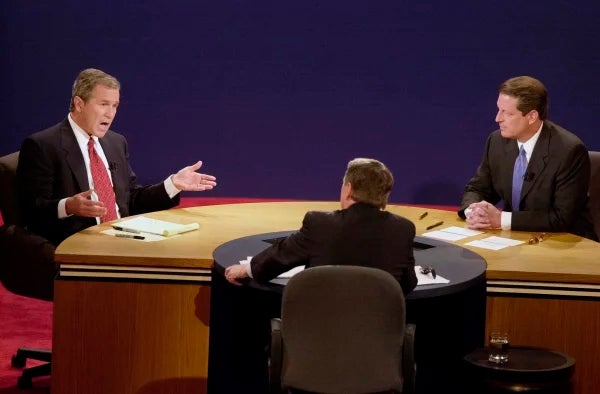
When Clinton won the presidency that year, his running mate was Tennessee Sen. Al Gore, who had little trouble winning the nomination to succeed Clinton in 2000. The economy was humming along, personal computers were transforming work and school and Gore had worked hard to separate himself from Clinton’s impeachment over an affair with a young White House intern.
Ironically, his opponent was another George Bush, the namesake son of the former president and himself a reelected governor of Texas. Gore and Bush held three televised debates that fall, and while neither candidate was regarded as having dominated, Gore’s efforts to belittle Bush as a lightweight may have backfired. His habit of rolling his eyes in mock disbelief struck some as condescending. And while the younger Bush was not a scintillating debater, he had the quality campaign consultants call “relatability.”
The importance of the debates in 2000 is itself debatable, as was the importance of these events in previous cycles. In the end, it probably mattered more that a third-party bid by consumer activist Ralph Nader split some of the Democratic vote in key states — especially Florida. That was the year that state made the difference in the Electoral College after giving the Republican a popular vote edge of just 537 votes statewide.
The return of the two-edged sword
The most recent one-term president in the TV debate era might also be said to have both benefited and suffered from debating before the nation. The current resident of the White House, President Biden, probably helped himself in some measure by withstanding the fury of his opponent in the 2020 debates.
That opponent was, of course, Donald Trump, who was still a formidable incumbent that fall after surviving an impeachment vote in the Senate and a bout with COVID, both in his reelection year. In the end, his efforts to downplay the COVID threat and blame others for its economic impact were the main contributors to his defeat that fall. But he seemed resolved to blow Biden off the stage with his aggressive performance, especially in the first of those two meetings that fall.
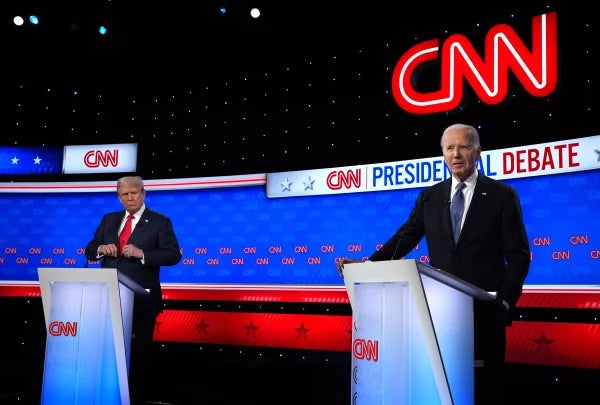
Biden had in fact not been seen as a world-class debater in his several bids for the presidency, particularly onstage as a rival to eventual nominee Barack Obama in 2008. But he had been a six-term senator and still retained much of the positive impression he had made as Obama’s vice president for the eight years that followed. He did not run to succeed his boss in 2016. His son Beau was battling cancer, and Obama’s secretary of state, Hillary Clinton, had already taken the inside lane to that year’s nomination.
But in 2020, in his late 70s, Biden ran for president and this time found the formula. He survived a weak start in the primaries and won the nomination going away — thanks largely to strong support among African American voters.
That fall, Biden had two televised debates with the incumbent Trump. The first, in September, was notable chiefly for Trump’s highly aggressive style, interrupting and commenting audibly when it was Biden’s turn to speak and generally ignoring moderators’ attempt to moderate.
The second Trump-Biden debate, in October, proved less raucous. But Trump once again sacrificed the air of incumbency favored in the past by sitting presidents and remained relentlessly on offense against Biden.
This fall, Trump is the first former president to be nominated again after being defeated since Grover Cleveland in 1892.
And he will be facing the current vice president who was elected alongside Biden four years ago. Harris and Trump have never met face to face. But it seems a good bet that Harris will be reviewing the videotape of Trump’s performance in those debates four years ago.
Post a Comment